Plain & Simple · No Jargon
How a DST Actually Works
Delaware Statutory Trusts can sound complicated. They're not. Here's the whole thing explained simply — from selling your property to collecting passive income on the other side.
The Process
Five steps from tired landlord to passive investor.
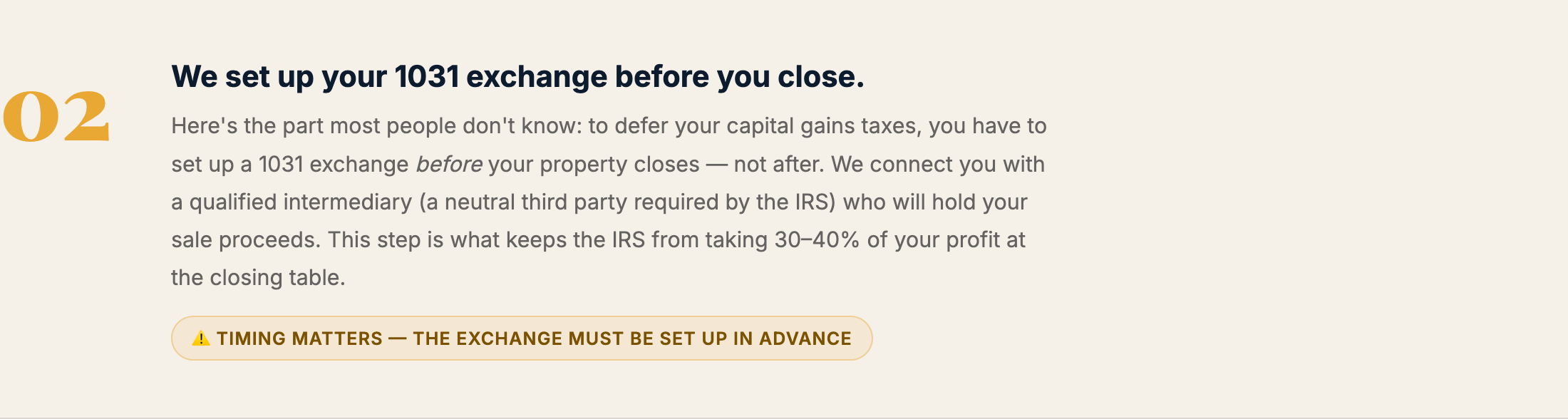
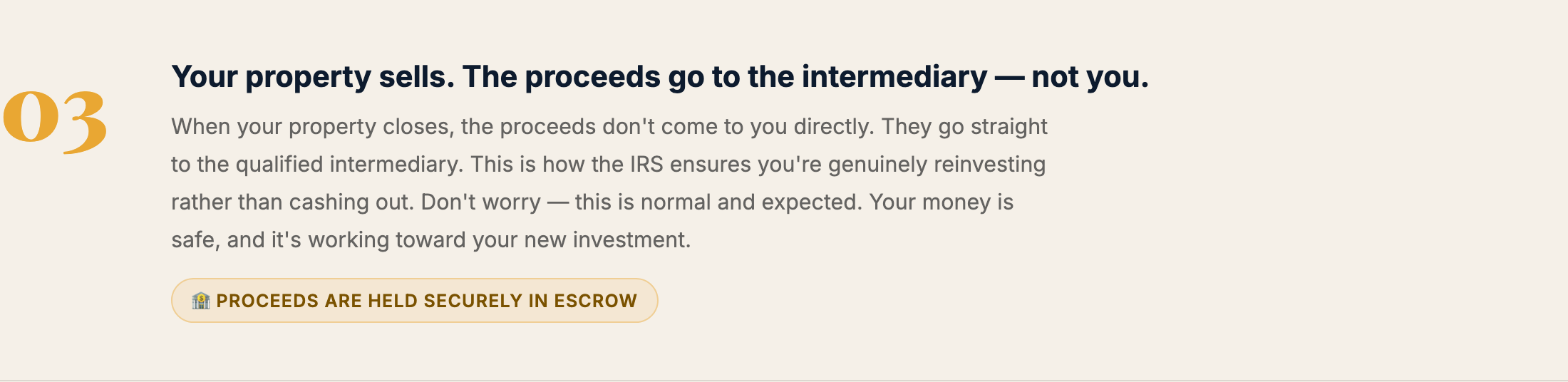
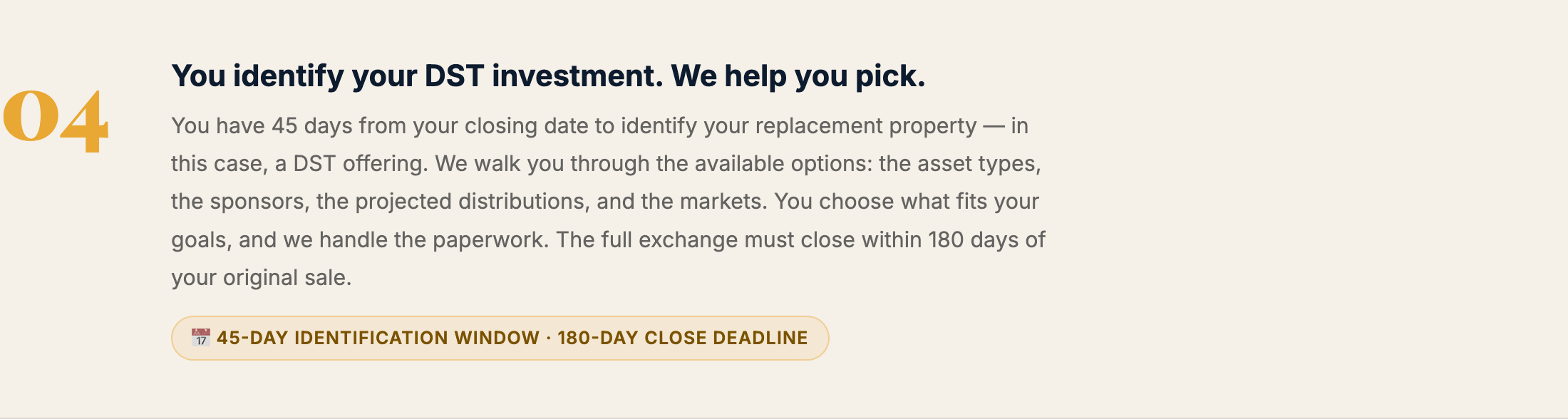
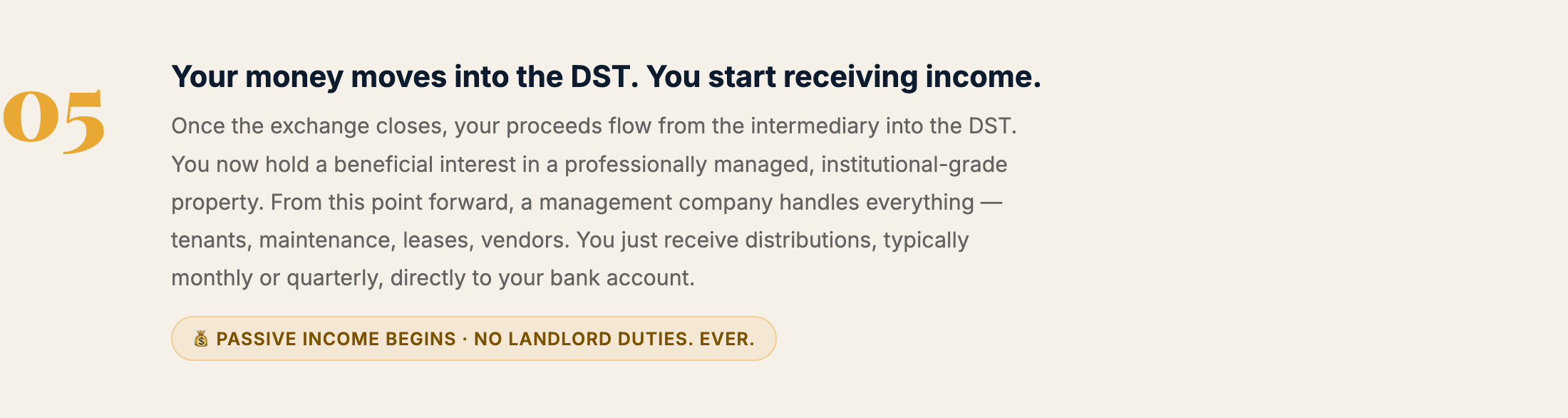
Most people expect this to be complicated. It isn't — especially when you have someone guiding you through it.

Common Questions
Things people usually ask us.
Do I have to sell my property to invest in a DST?
Not necessarily. Some investors choose to invest cash directly into a DST without selling an existing property. However, the most powerful use of a DST is as the replacement property in a 1031 exchange — which lets you defer your capital gains taxes. Most of our clients come to us in the context of a sale or planned sale.
What if I've already sold my property? Is it too late?
If your property has already closed and you received the proceeds directly, it's unfortunately too late for a 1031 exchange for that transaction. The exchange must be set up before your closing date. That said, if you haven't yet received proceeds — or if you're planning a future sale — reach out now so we can get the right structure in place before you close.
What kind of properties do DSTs typically invest in?
DSTs typically own large, institutional-grade commercial properties — things like Class A apartment communities, net-lease retail buildings anchored by national tenants, medical office buildings, and industrial distribution centers. These are properties that individual investors couldn't easily acquire or manage on their own, operated by experienced professional sponsors.
How much do I need to invest?
Most DST offerings have a minimum investment of $100,000. However, when completing a 1031 exchange, you must reinvest all of your equity and take on equal or greater debt to fully defer your taxes — so the amount reinvested is typically the full proceeds from your sale. We help you structure this correctly from the start.
Who qualifies to invest in a DST?
DST investments are available to accredited investors — generally, individuals with a net worth of over $1 million (excluding primary residence), or income above $200,000 per year ($300,000 for married couples). If you're unsure whether you qualify, we're happy to walk through that with you in a free consultation.
What happens when the DST eventually sells the property?
DST investments typically have a hold period of 4 - 7 years. When the trust disposes of the property, investors receive their share of the proceeds. At that point, many investors choose to do another 1031 exchange into a new DST — continuing to defer taxes and stay in real estate without any management responsibilities. Alternatively, heirs who inherit DST interests may benefit from a stepped-up cost basis, potentially eliminating the deferred tax liability.
Can I sell my DST interest if I need the money?
DSTs are illiquid investments — there is no active secondary market for DST interests, and you should not expect to be able to sell your interest before the trust disposes of the underlying property. You should only invest capital that you don't need access to during the anticipated hold period. This is an important consideration, and we make sure every client understands it before investing.
What does working with TheDSTGuy actually look like?
It starts with a free 30-minute call where we learn about your situation — your property, your goals, and your timeline. From there, if a DST makes sense for you, we walk you through the available offerings, explain the structures clearly, and connect you with a qualified intermediary for the exchange. We handle the complexity so you don't have to, and we never pressure you toward any particular decision.
Still have questions? That's what the free call is for.
No pressure, no sales pitch. Just a clear conversation about your situation and whether a DST could be a fit.